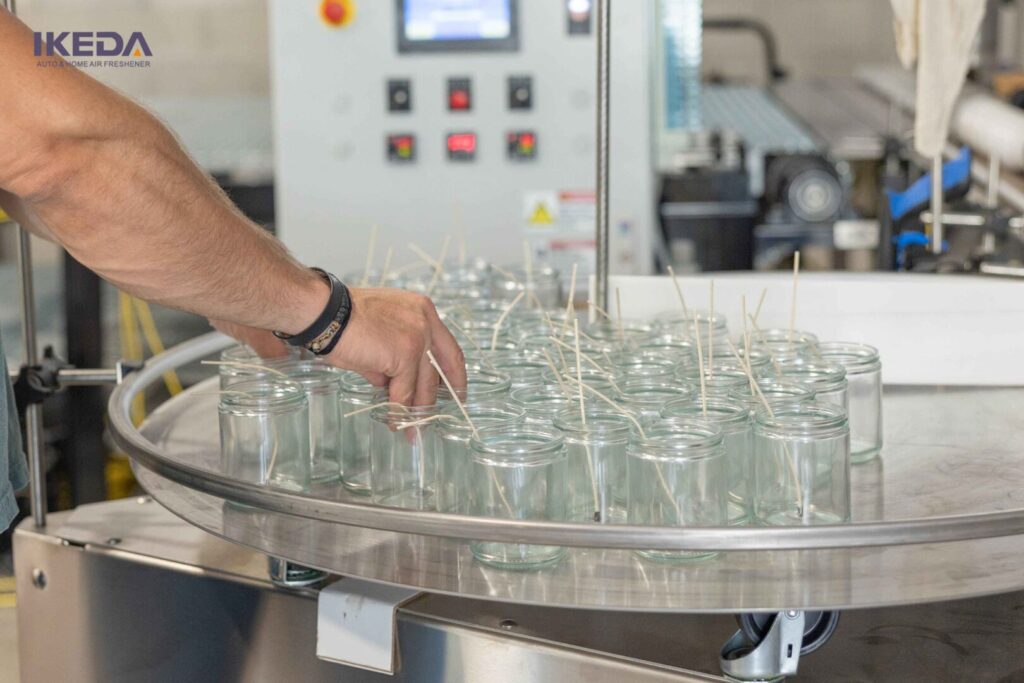
When you source candles in bulk—whether for retail shelves, spas, hotels, or private label—you probably already know one truth:
The candle industry looks simple from the outside, but the quality variables behind a single candle are surprisingly complicated.
Burn performance, wax type, wick size, fragrance compatibility, container heat resistance… one mistake in mass production and the entire shipment can fail.
This is exactly why many professional buyers rely on the “84 Rule.”
It’s not an official international standard, but rather a practical benchmark widely used by experienced importers and factories in China—including IKEDA—to judge whether a candle meets acceptable export-grade quality.
This article will explain what the 84 Rule means, why it matters to B2B buyers, and how you can use it to prevent costly problems in your supply chain.
And most importantly, how IKEDA applies it in real production, explore our candle quality standards and manufacturing process pages.—not theory, but real factory practice.
一. What Exactly Is the 84 Rule for Candles?
The 84 Rule simply means:
A candle must perform at least 80–85% consistently across the four core quality pillars: burn performance, scent throw, wax stability, and safety.
These four areas are what determine whether your customer will experience a good candle—or a disaster.
Let’s break them down realistically:
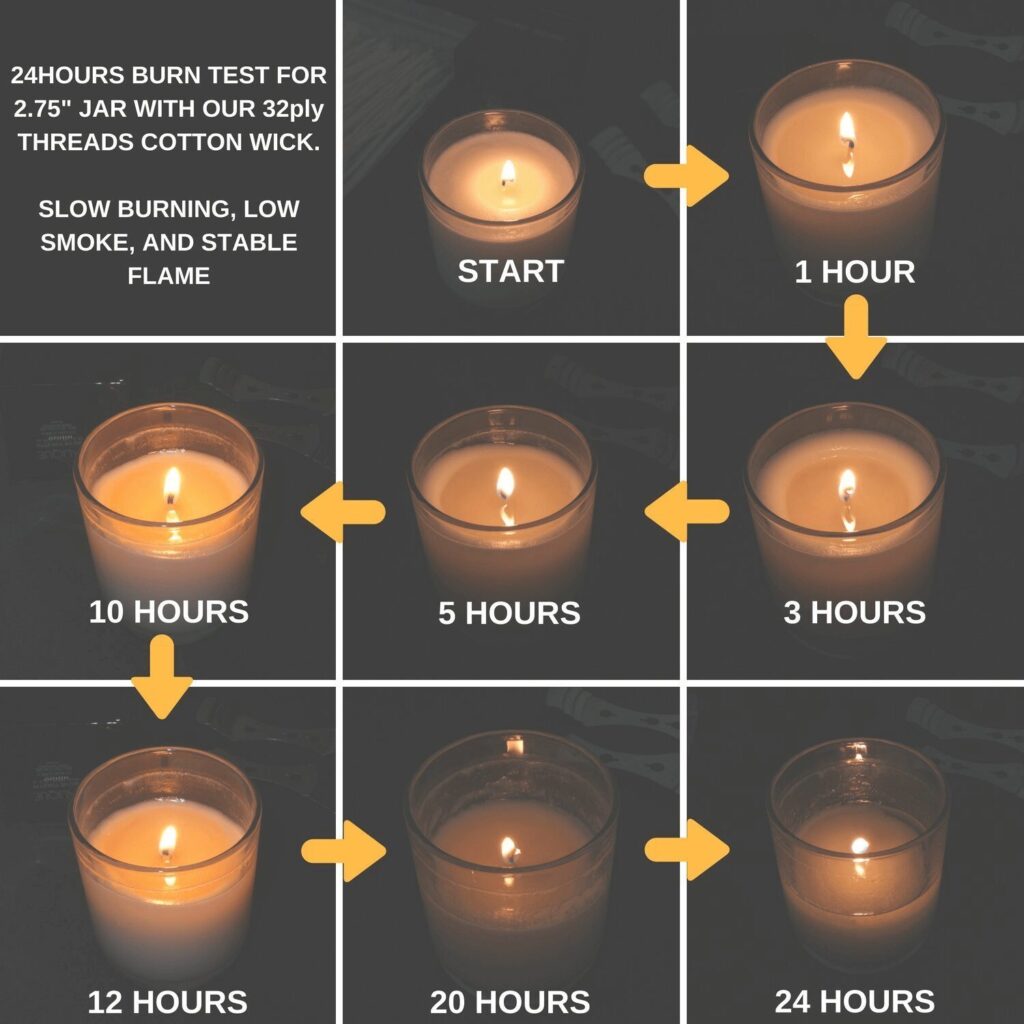
1. Burn Performance
This includes:
- Does the flame remain stable?
- Does the candle tunnel?
- Is the melt pool even after 2–3 hours?
- Is there carbon build-up (“mushrooming”)?
Burn issues are the #1 reason customers complain.
2. Scent Throw (Cold & Hot)
You already know this:
A beautiful candle with weak scent is not a sellable candle.
The scent throw must be:
- noticeable
- stable
- not overpowering
- consistent across the batch
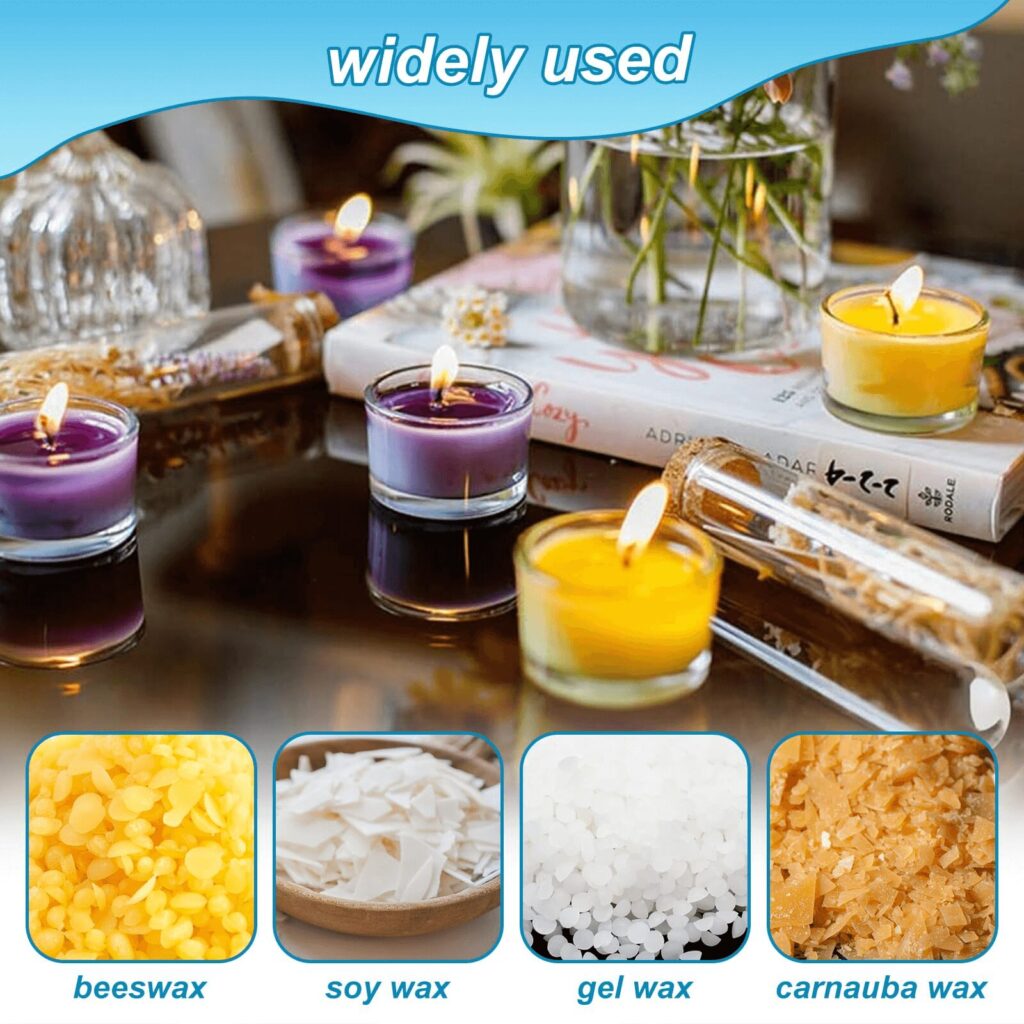
3. Wax Stability
The candle must not:
- sweat
- frost excessively
- separate oil
- crack in shipment
This is especially important for:
- soy candles (tend to frost)
- coconut blend (can sweat)
- paraffin (needs controlled cooling temps)
4. Safety Performance
A candle must:
- not overheat
- not break its glass container
- not create an excessively high flame
- not release black smoke
These issues may seem rare, but they are more common with small workshops that have no QC process.
The 84 Rule summarizes these four dimensions into one benchmark—simple, direct, and incredibly useful for B2B buyers evaluating factories.
二. Why the 84 Rule Matters for Bulk Buyers (and How It Saves You Money)
Because quality issues in candles don’t show up immediately—they show up after shipping, after storage, and after customers start burning them.
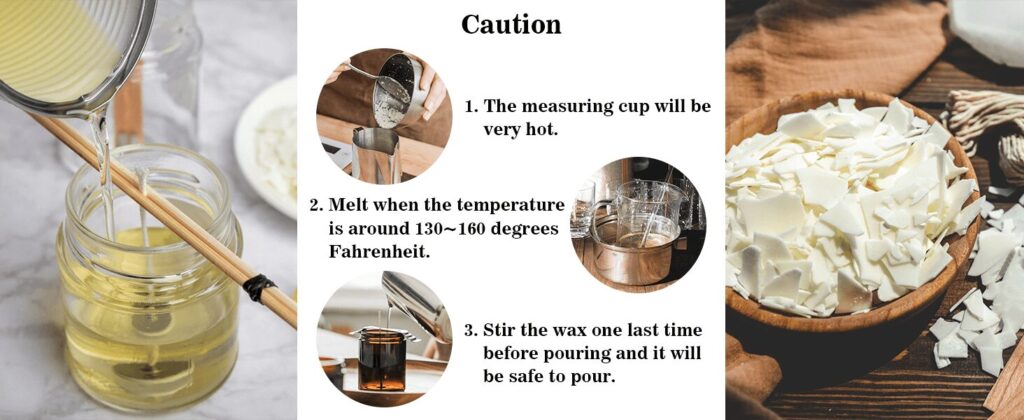
Many buyers only test samples for:
- scent
- burn
- appearance
But the 84 Rule goes deeper and looks at overall performance stability.
This stability is what makes the difference between:
A supplier who can do samples well,
VS.
A supplier who can maintain quality in 5,000 or 20,000 units.
Here’s how the 84 Rule helps serious buyers:
1. Helps you filter out unstable manufacturers
Some factories can produce beautiful samples but fail in mass production.
If they can’t provide burn test records aligned with the 84 Rule → walk away.
2. Reduces risk of returns and complaints
The most expensive problem in candle importing is mass returns due to:
- weak scent
- sweating
- tunneling
- overheating
- oil separation
Applying the 84 Rule upfront helps you catch issues early.
3. Speeds up OEM/Private Label development
When both sides use the same benchmark, conversations become efficient.
You avoid endless sampling cycles.
4. Gives you leverage in negotiations
Factories respect buyers who understand quality metrics.
You’ll be taken more seriously when you reference:
- burn pool diameter
- wick compatibility
- scent retention
- stability testing
5. Builds long-term brand protection
If you sell under your own label, consistency is your lifeline.
The 84 Rule ensures your brand doesn’t get damaged by unexpected QC failures.
三. How IKEDA Applies the 84 Rule in Real Candle Production (Not Theory)
Many factories claim to follow QC systems.
But in candle production, the details are everything.
Here’s how we apply the 84 Rule in a practical, rigorous way.
Stage 1: Raw Material Certification
IKEDA checks every batch of:
- soy wax melting point
- paraffin oil level
- fragrance compatibility
- wick cotton quality
Small ingredients can cause big failures.
We eliminate problems at the source.
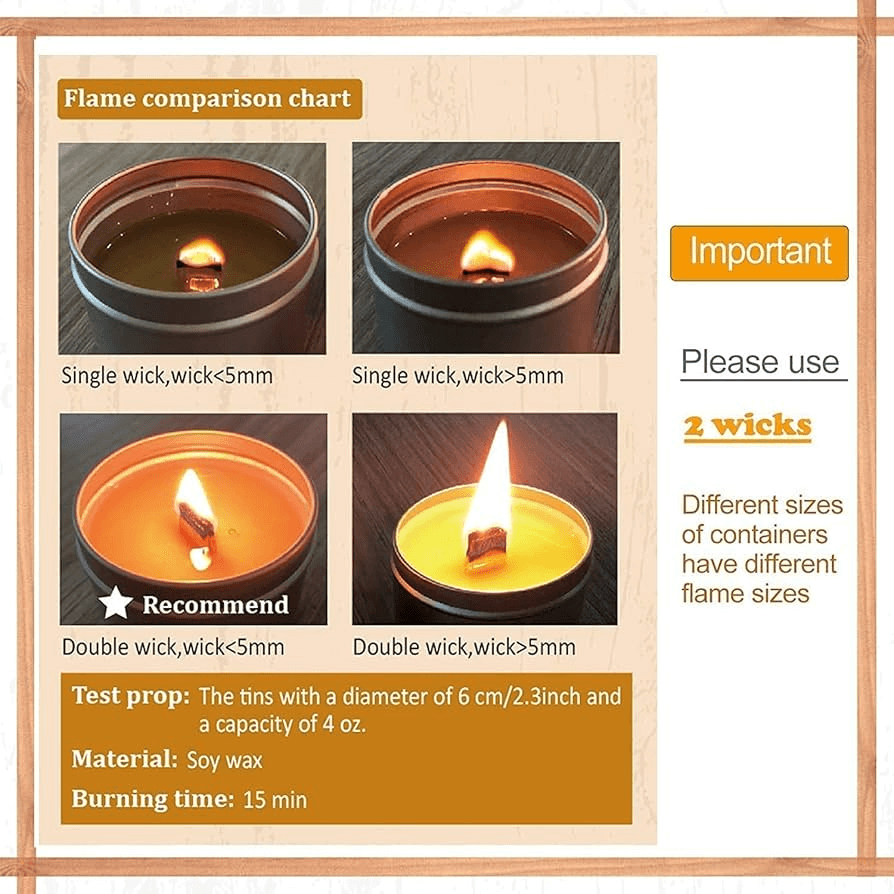
Stage 2: 48-Hour Burn Lab Testing
We test:
- flame height
- melt pool size
- carbon build-up
- soot level
- scent throw
- container temperature
For each client formula (OEM/ODM), we make 5–8 test pieces with different wicks before choosing the optimal one.
Most factories skip this step because it takes time.
We consider it non-negotiable.
Stage 3: Environmental Stability Tests
Candles behave differently depending on climate.
At IKEDA, we test:
- 40°C heat chamber to check sweating
- 5°C cold storage for frosting
- transport vibration simulation
This is especially crucial for:
- Middle East (heat)
- Europe (cold storage & winter shipping)
- Southeast Asia (humidity)
Stage 4: Pre-Shipment AQL Inspection
We follow AQL 1.0–2.5 standards, checking:
- surface condition
- wick position
- container cracks
- label accuracy
- leakage
- fragrance alignment
Every batch is traceable with QC reports, ASTM candle safety standards.
四. How to Apply the 84 Rule When Sourcing From China (Buyer Checklist)
If you’re sourcing from China—no matter the factory—you should use this checklist:
✔ Ask for burn test videos and data
If there’s no burn test lab → avoid.
✔ Approve a “golden sample”
Your mass production must follow this exact sample.
✔ Insist on proper wick selection
The wick determines 50% of the candle’s performance.
✔ Request climate stability test results
Especially if shipping across seasons.
✔ Set the 84 Rule in your purchase contract
Example:
“Products must meet minimum 80% burn consistency, scent throw, wax stability, and safety performance.”
✔ Request batch testing before shipment
Not only sample testing.
五. Common Problems the 84 Rule Helps Prevent
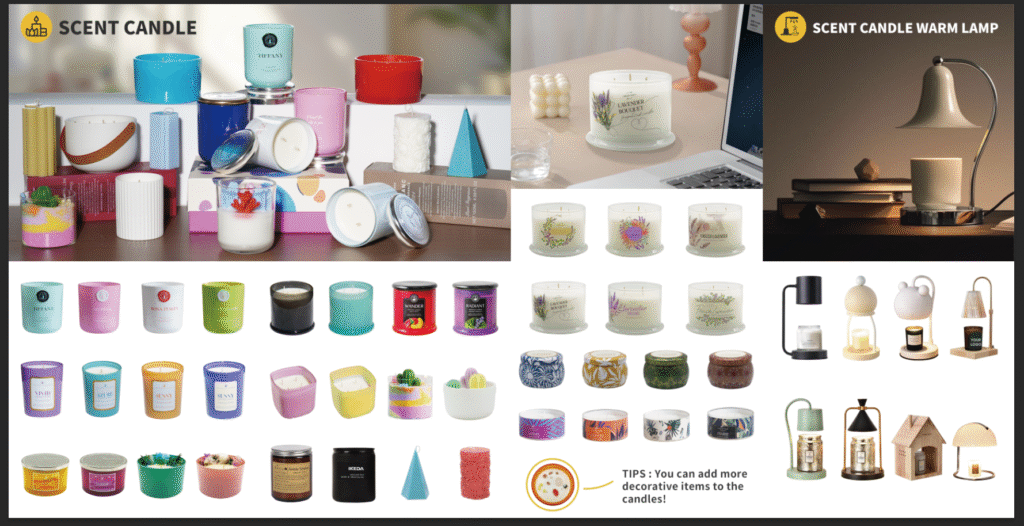
Here are real issues we’ve seen buyers suffer from other suppliers: scented candle collections
| Issue | Cause | How 84 Rule Prevents It |
|---|---|---|
| Weak scent | Low fragrance load | Scent throw testing |
| Tunneling | Wrong wick size | Burn pool evaluation |
| Frosting | Cooling process | Wax stability testing |
| Sweating | Oil mismatch | Raw material checks |
| Container cracking | Overheating | Safety performance test |
These aren’t small issues.
They can ruin entire shipments.
六. Why B2B Buyers Choose IKEDA Over Other Factories
Not all candle factories are built the same.
Buyers work with us because:
✔ We don’t guess—we test
Every candle is backed by burn data and QC reports.
✔ Strong OEM/ODM capability
From luxury packaging to custom scents.
✔ Consistency in mass production
Our quality stays the same in 500 units or 50,000 units.
✔ Transparent communication
We show test videos, lab results, and trial production updates.
✔ Low MOQ for new brands
We help small brands grow into big brands.
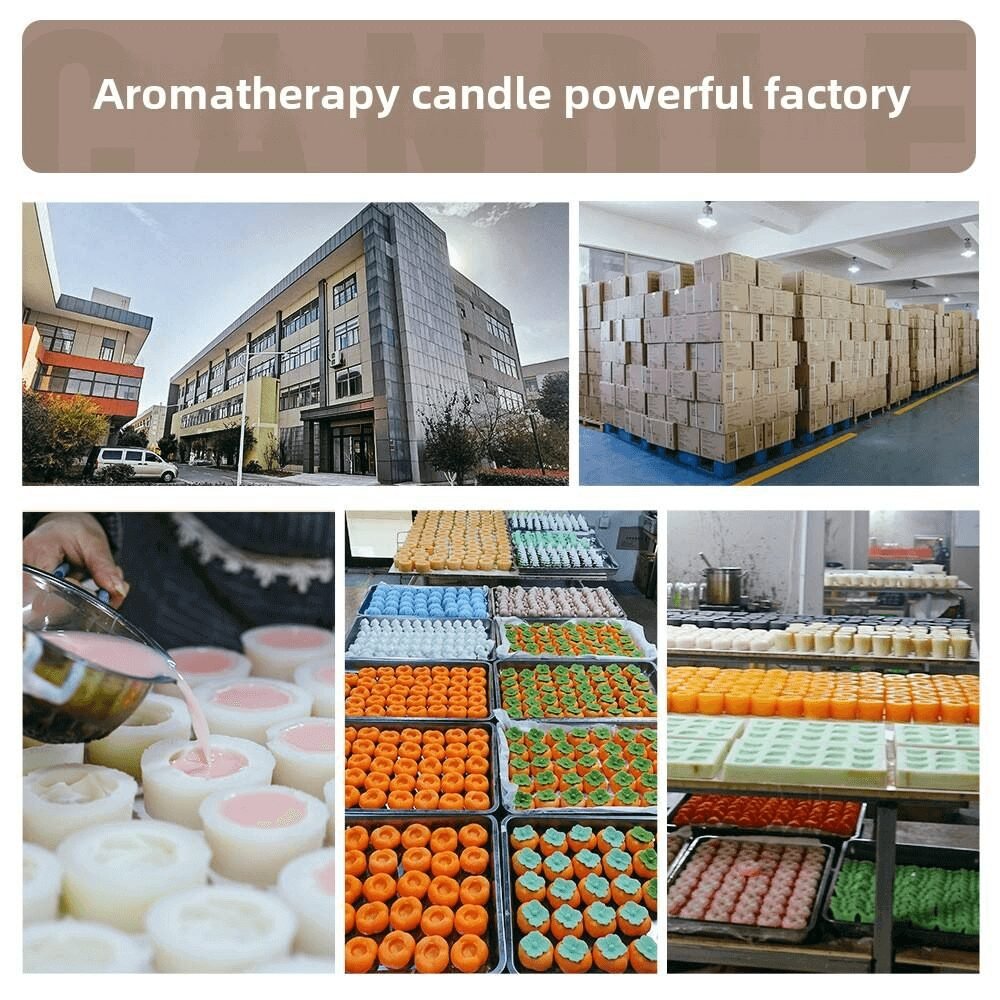
✔ Experience exporting to 70+ countries
We understand different climates, regulations, and market expectations.
Conclusion: Why the 84 Rule Should Be Part of Your Supplier Strategy
Candle quality is not about luck.
It’s about systems, testing, and consistency.
The 84 Rule gives bulk buyers:
- a simple
- reliable
- practical
- industry-proven
way to judge whether a candle factory can deliver export-grade quality and get a quote from IKEDA.
At IKEDA, we don’t just meet the 84 Rule—
we design our entire production around exceeding it.
If you want stable, reliable, and scalable candle production, our team can support you with:
- custom formulas
- private label development
- fragrance design
- packaging solutions
- mass-production QC