Choosing a private label candle manufacturer is an important step for any brand planning to launch or expand its candle collection. The right supplier can help you develop products that match your brand, maintain consistent quality, and meet your target budget.
However, comparing manufacturers based on price alone can lead to problems with product quality, delivery schedules, or customization. Before placing a bulk order, here are eight questions to ask potential suppliers.
1. What Manufacturing Experience and Capabilities Do You Have?
Start by understanding what the manufacturer can actually produce. Some suppliers specialize in standard candles, while others offer more extensive customization, including different wax blends, fragrance options, vessel materials, packaging, and labeling.
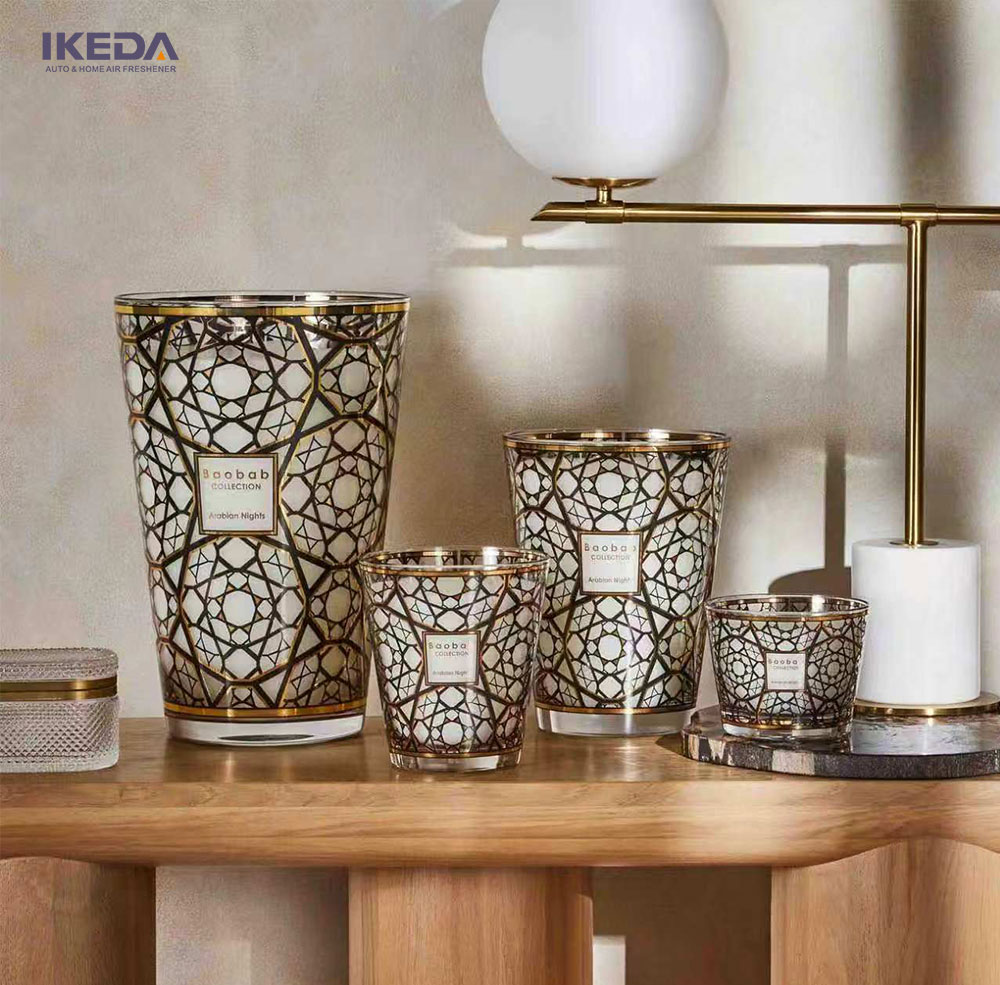
Ask whether the company has experience producing candles similar to your target products. If you are developing a premium home fragrance line, for example, check whether the supplier can support the required fragrance profile, vessel design, and packaging quality.
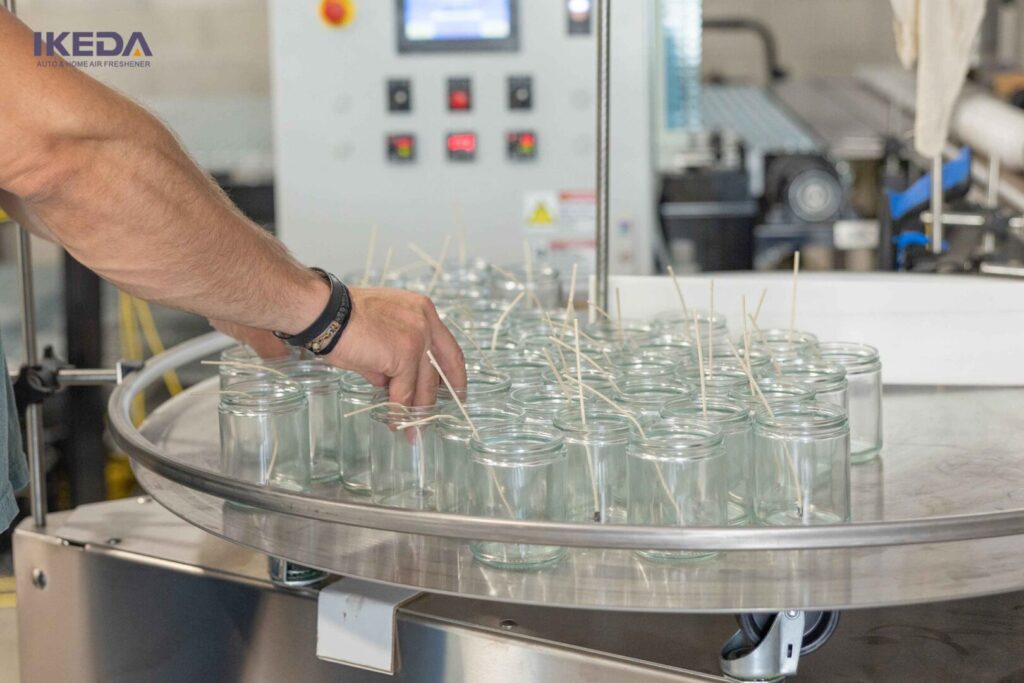
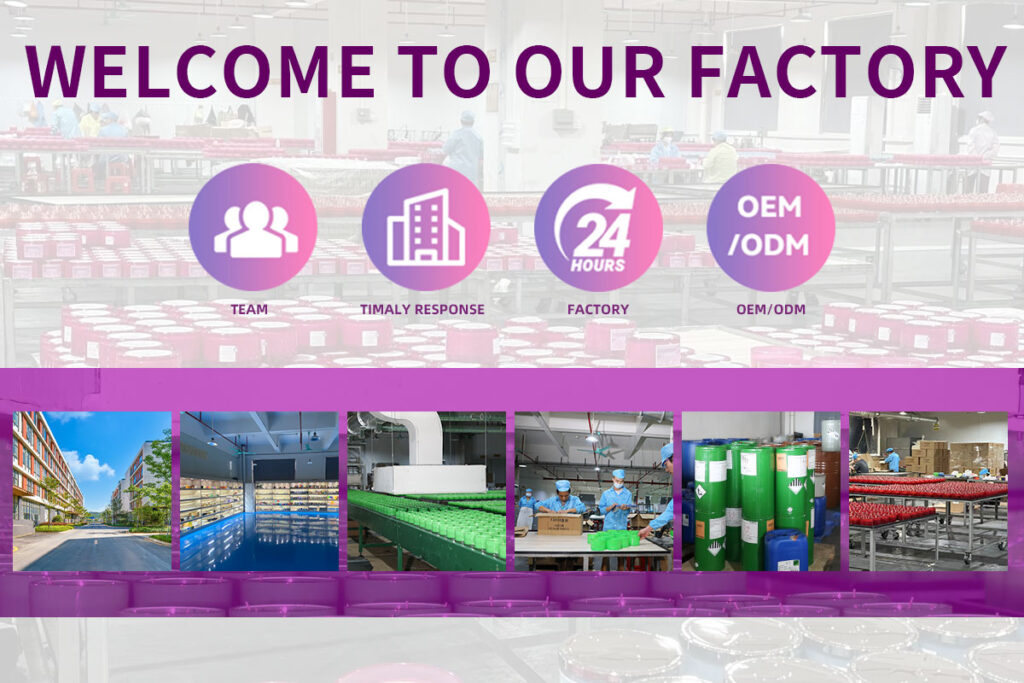
A manufacturer’s previous work, production facilities, and product samples can help you assess whether its capabilities match your expectations.
2. What Is Your Minimum Order Quantity (MOQ)?
Minimum order quantity directly affects your initial investment and inventory planning.
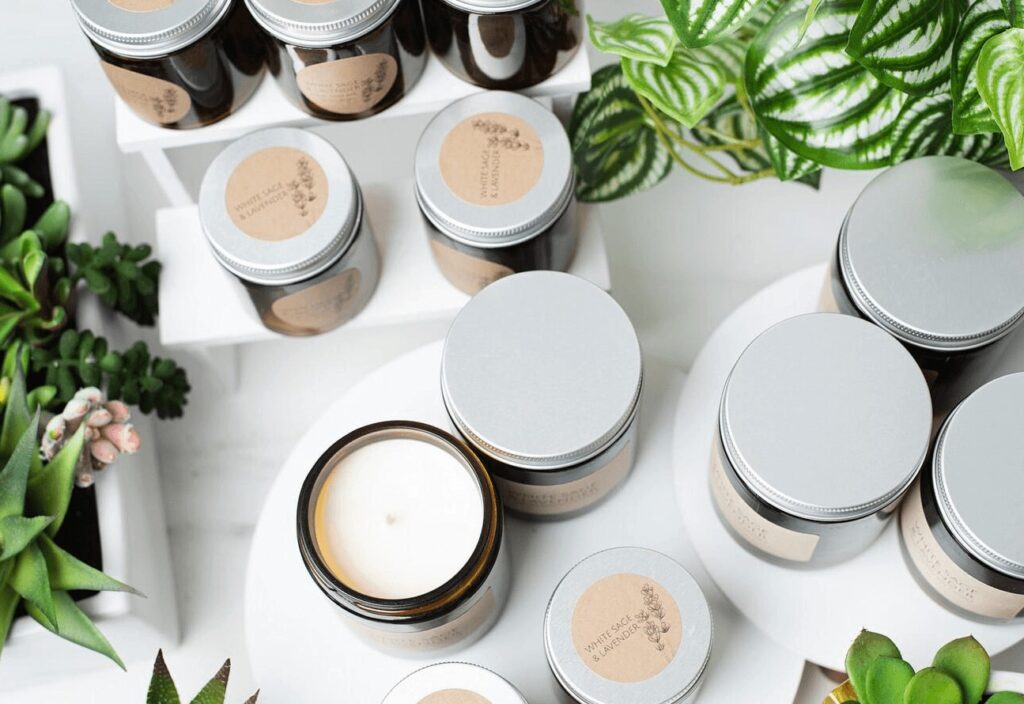
MOQ can vary depending on the candle type, fragrance, container, packaging, and degree of customization. A standard candle may have a different MOQ from a product requiring a custom glass vessel or specially printed packaging.
Before confirming an order, ask for the MOQ of each component and whether different fragrances or designs can be combined within one order.
If you are launching a new product line, discuss whether a smaller initial order is possible. A manageable first order can help you evaluate market demand before committing to larger quantities.
3. What Customization Options Are Available?
Private label manufacturing allows brands to develop products that reflect their own identity. However, customization capabilities vary between suppliers.
Ask whether the manufacturer can customize:
- Wax and fragrance: Different wax formulations, fragrance choices, and fragrance load options.
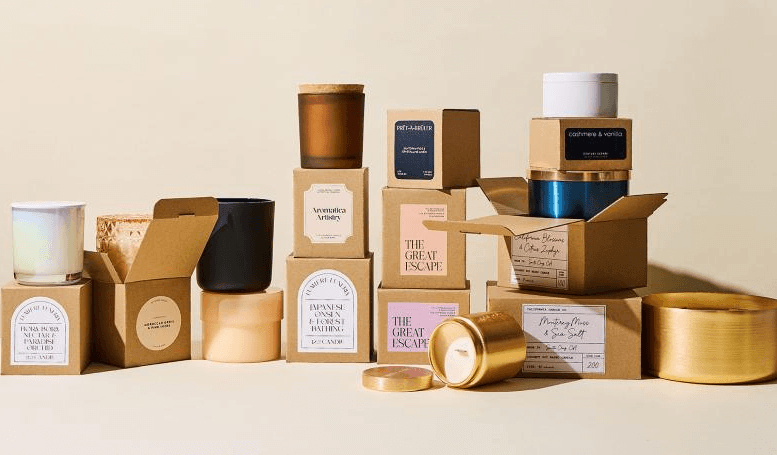
- Containers: Available shapes, colors, materials, and custom vessel designs.
- Branding: Labels, logos, printing, and other brand elements.
- Packaging: Gift boxes, retail packaging, protective packaging, and customized inserts.
It is also important to understand which options are available from existing designs and which require new tooling or additional development costs.
Requesting a detailed list of customization options early in the process can help you avoid unexpected expenses and development delays. If you are exploring different product styles for your brand, view our [custom candle options] to learn more about the designs and customization services available.
4. Can You Provide Samples Before Bulk Production?
Samples help you evaluate a candle before investing in a large order.
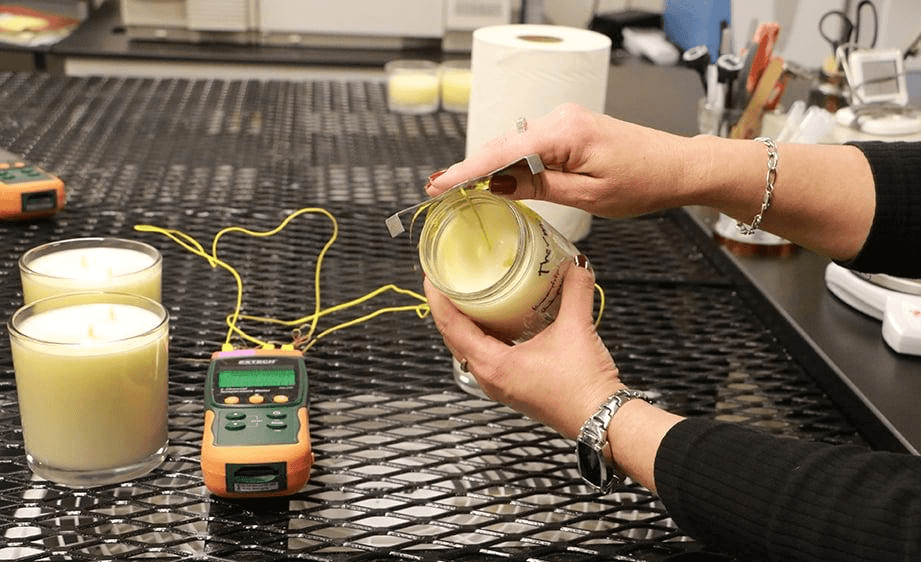
Check the appearance, fragrance quality, container finish, packaging, and overall presentation. For scented candles, you should also evaluate the burn performance under appropriate testing conditions.
Ask how the sample approval process works, how long sample development takes, and whether sample costs are refundable or deductible from a future order.
One important point is consistency. The approved sample should serve as a reference for bulk production. Confirm how the manufacturer controls differences in fragrance, color, appearance, and other agreed specifications between samples and finished products.
5. How Do You Manage Quality Control and Product Safety?
Candle quality involves more than appearance. Product performance and safety also matter, especially for brands selling through retailers, distributors, or international markets.
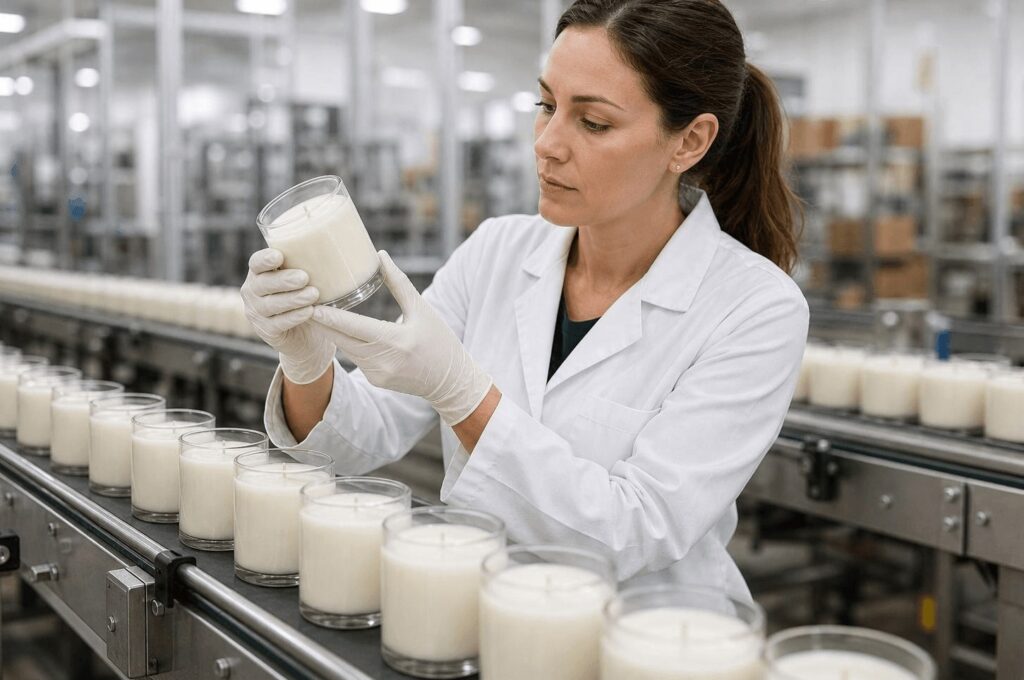
Ask the supplier how it checks raw materials, production batches, finished products, and packaging. You can also request information about wick selection, burn testing, fragrance compatibility, and the handling of defective products.
For international sales, determine which safety requirements and documentation apply in your target market. Requirements can differ by country and product type, so do not assume that one certificate or test report covers every market.
Before production begins, agree on product specifications, acceptable quality standards, inspection procedures, and how quality issues will be handled.
For international sales, determine which safety requirements and documentation apply in your target market. For products sold in the United States, consult the U.S. Consumer Product Safety Commission’s candle business guidance for information on applicable requirements and relevant candle safety standards.
6. Is the Quotation Clear About All Costs?
The lowest unit price does not always represent the lowest total cost.
A quotation should clearly explain what is included, such as the candle itself, container, fragrance, labeling, retail packaging, and standard quality checks. Ask separately about sample fees, mold or tooling charges, packaging setup fees, and other development costs where applicable.
You should also clarify shipping terms, freight costs, payment schedules, and any additional charges that could affect the final landed cost.
When comparing suppliers, make sure you are comparing equivalent specifications and order quantities. A lower quotation may reflect simpler packaging, different materials, or a different level of customization.
7. What Are Your Production Lead Times and Delivery Arrangements?
A reliable delivery schedule helps you plan product launches, seasonal promotions, and inventory replenishment.
Ask how long sampling, sample approval, raw material preparation, bulk production, and shipment usually take. Confirm whether the quoted lead time begins after deposit payment, final sample approval, or another milestone.
If you are ordering candles for a seasonal campaign or retail launch, communicate the required delivery date early. Ask how the supplier manages production during peak periods and what happens if a delay occurs.
It is also useful to confirm packaging requirements, carton specifications, shipping arrangements, and the documents needed for your destination market.
8. Can You Support Long-Term Cooperation?
For many brands, the first order is only the beginning. As sales grow, you may need additional fragrances, new packaging designs, repeat orders, or larger production volumes.
Ask how the manufacturer manages repeat orders and maintains consistency between batches. You should also understand who will handle your account, how quickly questions are usually answered, and how changes to product specifications are approved.
Discuss confidentiality and ownership of your designs, artwork, and other brand assets where relevant. Written agreements can help clarify responsibilities and reduce misunderstandings.
A good supplier should be able to explain its processes clearly and communicate potential problems before they become major issues.
Compare Manufacturers Before Making a Decision
Use the following checklist when evaluating potential suppliers.
| Evaluation point | What to confirm |
|---|---|
| Manufacturing capability | Relevant product experience and production options |
| MOQ | Order requirements for each customized component |
| Customization | Fragrance, vessel, branding, and packaging options |
| Samples | Development process and approval standards |
| Quality control | Testing procedures and applicable documentation |
| Pricing | Complete quotation and additional charges |
| Lead time | Sampling, production, and delivery schedule |
| Long-term support | Repeat-order consistency and communication |
The best private label candle manufacturer is not necessarily the cheapest one. It is the supplier that can meet your product requirements, provide transparent pricing, maintain agreed quality standards, and support your business as it grows.
Once you have compared suppliers, review the available candle products and manufacturing options to see which solutions best match your brand’s requirements.
Prepare Before Requesting a Quotation
To receive a more accurate quotation, prepare the following information:
- Candle type, size, and estimated order quantity
- Preferred wax, fragrance, and container
- Label design and packaging requirements
- Target market and applicable compliance requirements
- Target price and expected delivery date
The more clearly you define your requirements, the easier it is for manufacturers to assess feasibility and provide a useful proposal.
Looking for a Private Label Candle Manufacturing Partner?
If you are planning to develop a new candle collection or expand your existing product range, working with an experienced manufacturing partner can help simplify product development and purchasing.
Contact IKEDA to discuss your private label candle requirements, customization options, and quotation. Share your product ideas and target order quantity to start the conversation.