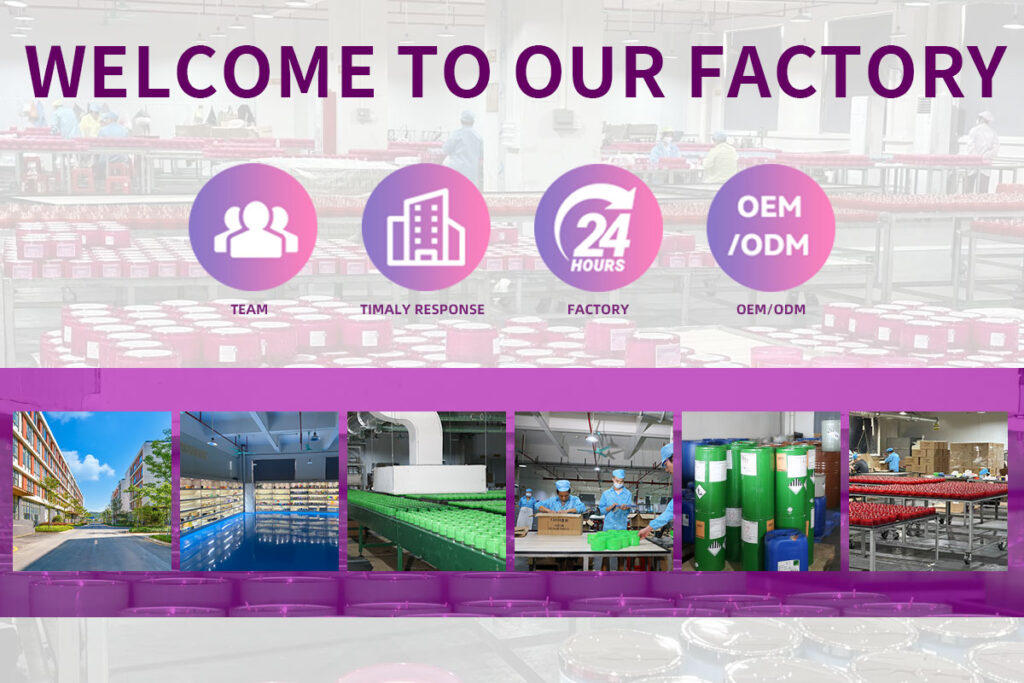
Choosing the right candle supplier is one of the most important decisions for a private label brand.
The supplier you choose can directly affect your product quality, cost, customization options, lead time, and ability to scale. For a small test order, working with a trading company may seem convenient. But when your brand starts placing larger and repeat orders, the advantages of working directly with a candle manufacturer can become more significant.
So, which is better for private label candles: a candle manufacturer or a trading company?
The answer depends on your order volume, customization requirements, target market, and long-term growth plans.
For B2B buyers, the goal should not simply be finding the cheapest supplier. The better approach is to find a partner that offers the right balance of quality, price, customization, production capacity, and supply stability.
Candle Manufacturer vs Trading Company: What Is the Difference?
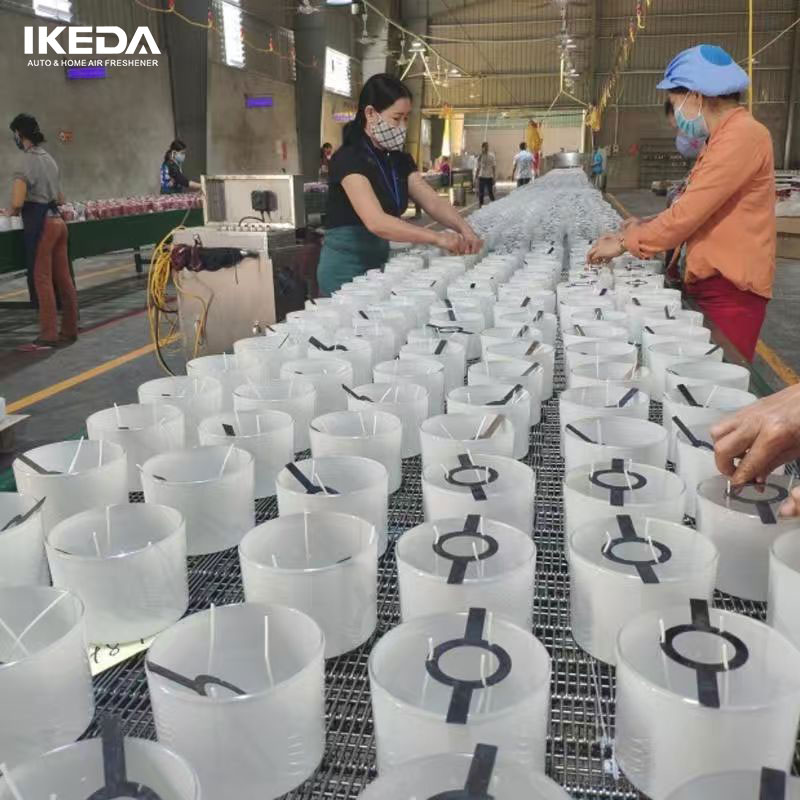
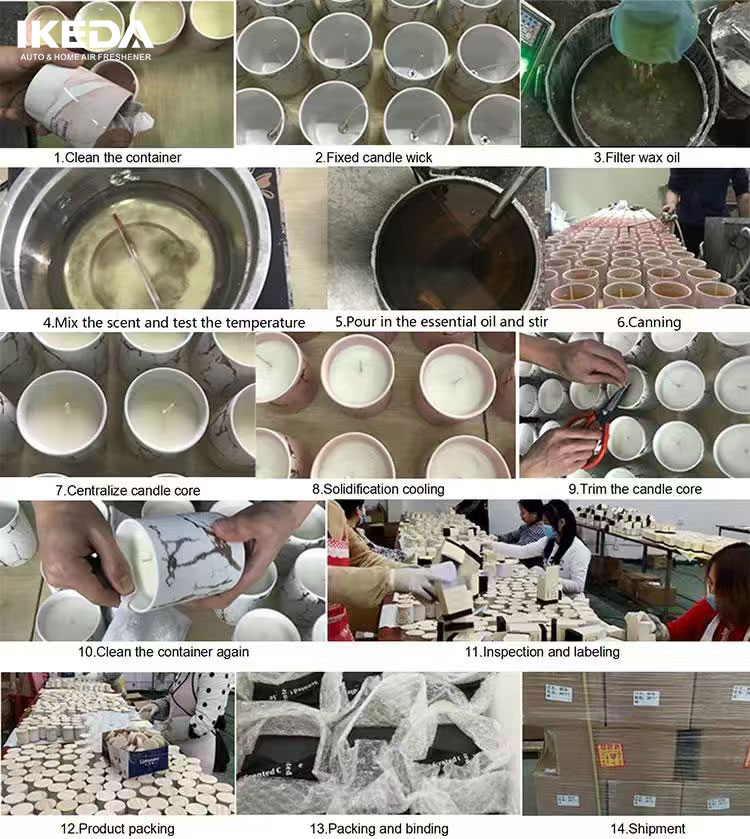
A candle manufacturer produces candles directly in its own factory or controlled production facility. Depending on its capabilities, the manufacturer may manage wax preparation, fragrance blending, candle filling, wick assembly, packaging, quality inspection, and other production processes.
A trading company, on the other hand, usually sources products from one or more factories and sells them to international customers.
Trading companies can provide convenience because buyers may be able to source different products through one supplier. This can be useful for new businesses or buyers with smaller and more varied purchasing requirements.
However, private label brands often require much more than product sourcing.
They may need customized fragrances, candle vessels, packaging, labels, product dimensions, colors, gift sets, and even new product development.
This is where the difference between a manufacturer and a trading company becomes more important.
1. Customization: How Much Control Does Your Brand Need?
Customization is one of the biggest reasons private label brands choose to work directly with manufacturers.
A private label candle may require customization in areas such as:
- Fragrance and scent profiles
- Wax formulation
- Candle size and weight
- Glass or ceramic vessels
- Wick specifications
- Candle color
- Labels and branding
- Gift boxes
- Product sets
- Packaging design
A direct manufacturer can usually communicate with the buyer about production specifications without adding another layer between the brand and factory.
This can make product development more efficient, especially when the project involves multiple product specifications.
Trading companies can also arrange customized candles, but the communication chain may involve the trading company, factory, and buyer. For highly customized projects, this can increase communication time and make technical adjustments more complicated.
For brands looking for private label candle manufacturing, working directly with an experienced manufacturer can provide greater control over product development and production.
2. Quality Control: Consistency Matters More Than One Good Sample
A good sample does not automatically guarantee good mass production.
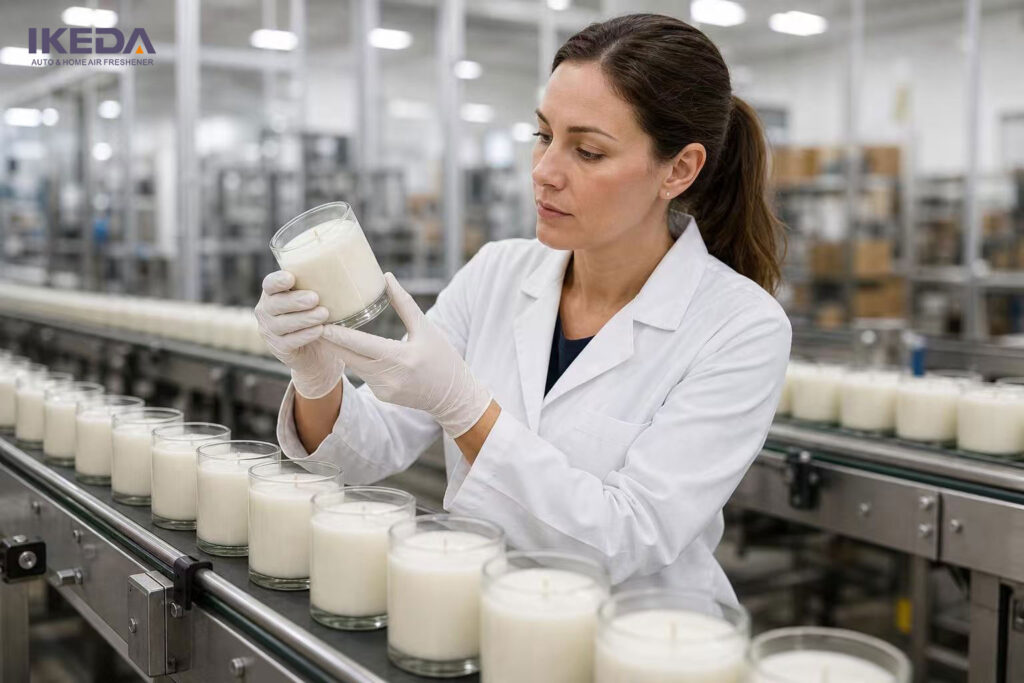
For B2B buyers, the real question is whether a supplier can maintain consistent quality across thousands or even tens of thousands of units.
Important quality factors for candles may include:
- Wax appearance
- Fragrance consistency
- Fragrance load
- Wick performance
- Burn behavior
- Candle weight
- Filling accuracy
- Vessel quality
- Label placement
- Packaging quality
When buying directly from a manufacturer, buyers can establish product specifications and quality candle safety requirements with the production team before mass production begins.
This can be particularly important for repeat orders.
If the first production batch performs differently from the second or third batch, a private label brand may face customer complaints, returns, negative reviews, or additional quality costs.
For this reason, quality control should be evaluated at the factory level rather than based only on a supplier’s sales presentation.
3. Pricing: Look Beyond the Unit Price
Price is naturally one of the first concerns for B2B buyers.
However, comparing only the quoted candle price can lead to the wrong purchasing decision.
A better comparison should consider the total sourcing cost, including:
- Product cost
- Packaging cost
- Customization costs
- Mold or tooling costs
- Sampling costs
- Inspection costs
- Shipping costs
- Defective product costs
- Rework costs
- Inventory costs
A trading company may sometimes offer an attractive price, particularly for standard products.
A manufacturer may provide more competitive pricing for larger repeat orders because the buyer is sourcing closer to the production source.
For example, if a retailer orders 20,000 units per month, even a small difference in unit cost can have a meaningful impact on annual purchasing costs.
Therefore, large buyers should compare total landed cost and long-term supply value, rather than simply choosing the lowest initial quotation.
4. MOQ: What Order Quantity Makes Sense for Your Business?
Minimum Order Quantity, or MOQ, is another important consideration.
Trading companies may be able to offer lower MOQs because they work with different factories or standard product ranges.
This can be helpful for:
- New brands
- Market testing
- Small retailers
- Limited seasonal collections
- Initial product launches
Manufacturers may require higher MOQs for customized products because production requires dedicated raw materials, packaging, fragrance development, molds, or production scheduling.
However, higher MOQ is not necessarily a disadvantage for established B2B buyers.
If your business already has stable sales, ordering larger quantities directly from a manufacturer can reduce unit costs and improve supply stability.
The important question is:
Does the supplier’s MOQ match your current demand and future growth plan?
5. Production Capacity and Scalability
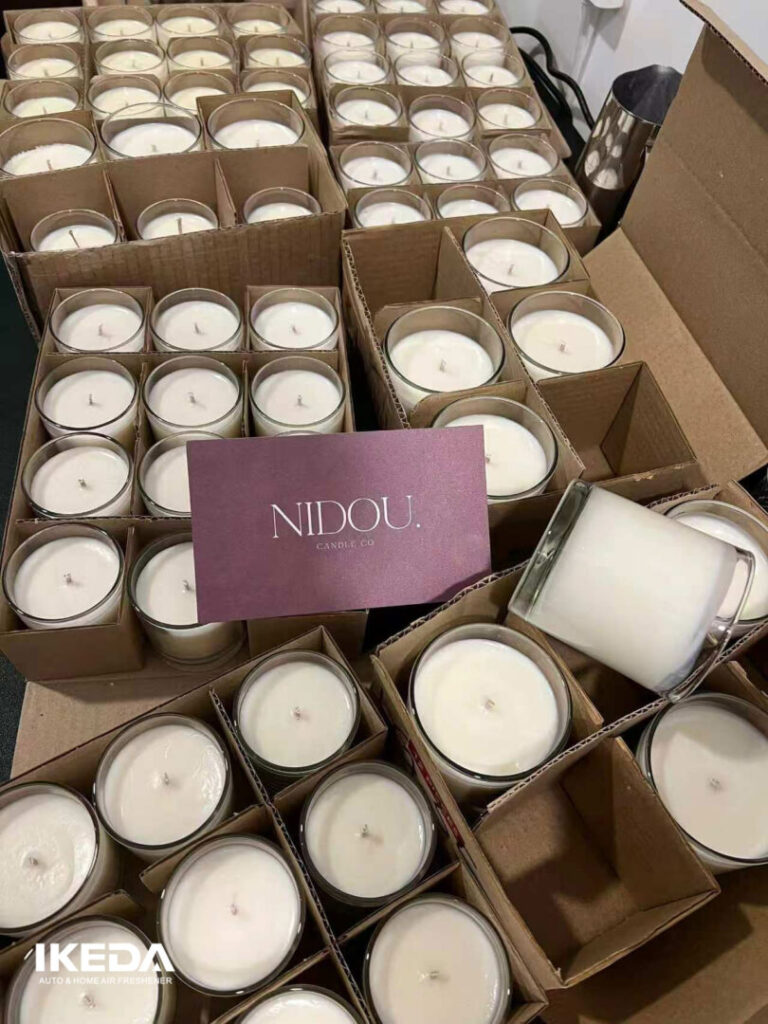
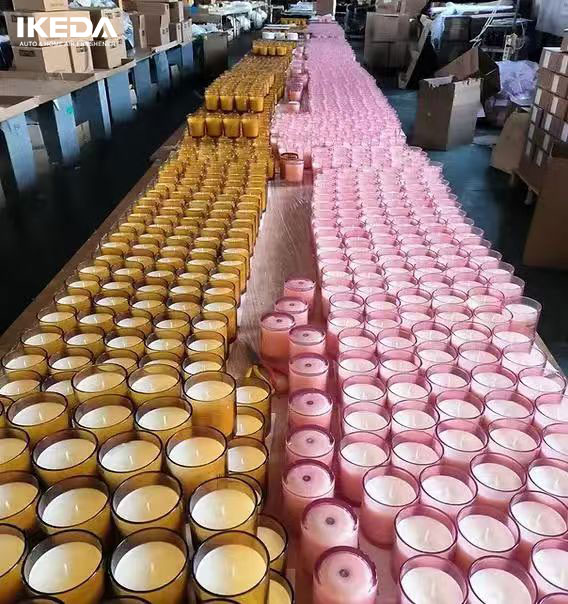
A supplier that can handle 1,000 candles may not necessarily be able to handle 50,000 or 100,000 units.
This is why B2B buyers should evaluate production capacity before entering a long-term partnership.
Ask potential suppliers about:
- Monthly production capacity
- Available production lines
- Raw material supply
- Packaging capacity
- Quality inspection procedures
- Production lead times
- Peak-season capacity
- Ability to support repeat orders
For a growing private label brand, scalability is critical.
Your first order may be 2,000 units. If the product performs well, the next order could become 10,000, 30,000, or 50,000 units.
A suitable manufacturing partner should be capable of growing with your business rather than becoming a supply bottleneck.
6. Lead Time and Supply Stability
For large retailers and distributors, late delivery can be more expensive than a slightly higher product price.
A delayed shipment can affect:
- Retail promotions
- Seasonal launches
- Inventory planning
- Warehouse schedules
- Customer commitments
When evaluating a candle supplier, ask for a clear production timeline covering:
Sample → Approval → Raw Materials → Production → Quality Inspection → Packaging → Shipment
A professional manufacturer should be able to explain each stage clearly.
For long-term private label programs, buyers should also discuss how the supplier handles raw material shortages, urgent orders, peak seasons, and repeat production.
B2B Candle Supplier Comparison Checklist
Before choosing a supplier, use the following checklist to compare manufacturers and trading companies objectively.
| Factor | Candle Manufacturer | Trading Company |
|---|---|---|
| Product customization | Usually high | Depends on factory |
| Direct production control | High | Limited |
| Quality control visibility | Usually higher | Depends on supplier |
| MOQ | Often higher for customization | Often more flexible |
| Product variety | Usually focused | Often broader |
| Factory communication | Direct | Through intermediary |
| Production scalability | Usually stronger | Depends on factories |
| Pricing for large volume | Often competitive | May include intermediary margin |
| Product development | Stronger with OEM/ODM | Depends on factory |
| Supply chain flexibility | Factory-specific | Can access multiple factories |
| Best for | Long-term private label brands | Testing and multi-product sourcing |
The table should not be interpreted as meaning that every manufacturer is better than every trading company.
The real difference is how well the supplier matches your purchasing requirements and international trade data.
7 Questions to Ask Before Placing a Private Label Candle Order
Before making a final decision, B2B buyers should ask suppliers these questions:
1. Can you manufacture customized candle products?
Ask specifically about fragrance, wax, vessel, wick, size, color, label, and packaging customization.
2. What is the MOQ for customized products?
Make sure the MOQ applies to the actual product you want to order, not only standard candles.
3. Can you provide product samples?
Samples allow buyers to evaluate fragrance, appearance, packaging, and burning performance before mass production.
4. What is your production capacity?
Ask about normal monthly capacity as well as peak-season capacity.
5. How do you control quality during mass production?
Look for clear procedures rather than general statements such as “we have strict quality control.”
6. What is the standard production lead time?
Ask for a complete timeline from order confirmation to shipment.
7. Can you support long-term repeat orders?
This is especially important for retailers, distributors, and established private label brands.
Which Is Better for Your Private Label Candle Brand?
There is no single answer for every business.
A trading company may be a better choice if you:
- Are testing a new market
- Need a low MOQ
- Want access to multiple product categories
- Need ready-made products
- Have relatively simple customization requirements
- Prefer one supplier to coordinate multiple factories
A candle manufacturer may be a better choice if you:
- Are building a long-term private label brand
- Need customized candles
- Require consistent quality
- Have larger order volumes
- Need stable repeat production
- Want greater control over product specifications
- Need competitive factory-level pricing
- Plan to expand your product range
- Require a scalable supply partner
For established retailers, importers, distributors, and private label brands, a direct relationship with an experienced candle manufacturer can provide stronger control over product quality, customization, production planning, and long-term costs.
Final Thoughts: Choose a Supplier, Not Just a Price
Choosing between a candle manufacturer and a trading company should not be based on price alone.
A trading company can provide convenience, flexibility, and access to multiple factories. For smaller or exploratory orders, this can be valuable.
However, when your business depends on consistent product quality, customized designs, competitive pricing, reliable lead times, and scalable production, a capable private label candle manufacturer can become a strategic supply-chain partner rather than simply another vendor.
Before placing your next order, compare suppliers based on MOQ, customization, quality control, production capacity, lead time, pricing, and long-term scalability.
The best supplier is not necessarily the one offering the lowest quotation.
It is the one that can consistently deliver the right product, at the right quality, at the right volume, and at the right cost—while supporting your brand as it grows.
Looking for a reliable private label candle supplier? Request a quote to discuss your product requirements, MOQ and packaging options.